Raising Goats on Your Northeast Texas Acreage: A Starter Guide

Shannon Miles
Shannon Miles Group, eXp Realty
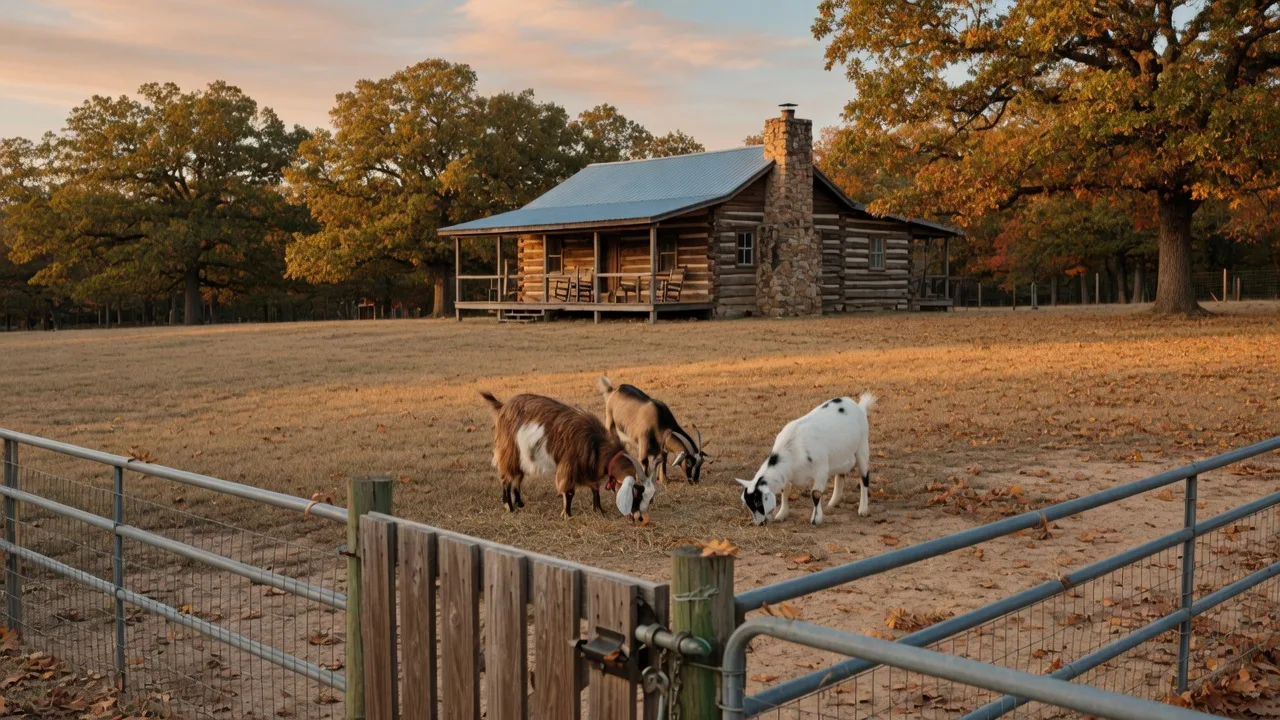
Raising goats on a Northeast Texas acreage is one of the most satisfying ways to put a few acres to work, and it is more doable than people expect. A small herd clears brush, supplies milk or meat, and turns kids into confident little farmers. Here is how to start on a place like 6260 Farm Road 197 in Arthur City, from breeds that handle our summers to the fencing that keeps them home.
Pick Breeds That Handle Texas Heat
Texas is goat country, and the breeds that thrive here are the ones bred for heat and brush. Boer goats grow fast and are the most common meat breed in the state. Kiko goats are hardy foragers that stay healthy on pasture alone, and Spanish goats are the classic brush-clearing workhorses. If you want milk on a small place, Nigerian Dwarf goats are gentle, easy to handle, and perfect for a family acreage. Any of them will feel at home on the sandy loam and open pasture at 6260 Farm Road 197.
"A goat-proof fence is the difference between a peaceful herd and a neighborhood tour."
Fencing Is the Whole Game
Goats are escape artists, so fencing is the first project. Plan on a fence at least four feet tall, built from tight woven wire with the bottom wire just a few inches off the ground so young kids cannot crawl under, or a five-strand high-tensile line. The pipe fencing and barbed-wire fencing already in place at this property mark the boundary beautifully, but goats need something tighter along the pasture, so budget for adding woven wire or netting to the existing lines. It is the difference between a peaceful herd and a neighborhood tour.
What a Small Herd Needs
Beyond fencing, a small herd needs three things: a three-sided shelter from rain and north wind, clean water every single day, and loose minerals made for goats. Hoof trimming every six to eight weeks and a deworming schedule set with your vet keep them healthy. Fall is a smart time to start here, because the heat breaks and the first freeze near Paris usually waits until mid-November, which gives you a solid window to build shelter and fence before winter.
Why Acreage Like This Works
Four and a half acres is plenty for a small herd, a chicken flock, and a garden. The open ground in front of the log cabin gives goats room to graze, the mature trees behind it hold shade and privacy, and the sandy loam drains well after a rain. Country living in Lamar County means quiet mornings, wide skies, and animals right outside your door, and a wrap-around porch is the perfect place to watch them.
Interested in a property like this? Contact the Shannon Miles Group at (903) 785-2005 or visit shannonmiles.com
Written by Shannon Miles
Shannon Miles is a REALTOR with the Shannon Miles Group at eXp Realty in Paris, TX. She specializes in acreage, new construction, and log cabins across Northeast Texas.
Contact Shannon