The Texas Ag Exemption on Acreage: What Lamar County Homesteaders Should Know

Shannon Miles
Shannon Miles Group, eXp Realty
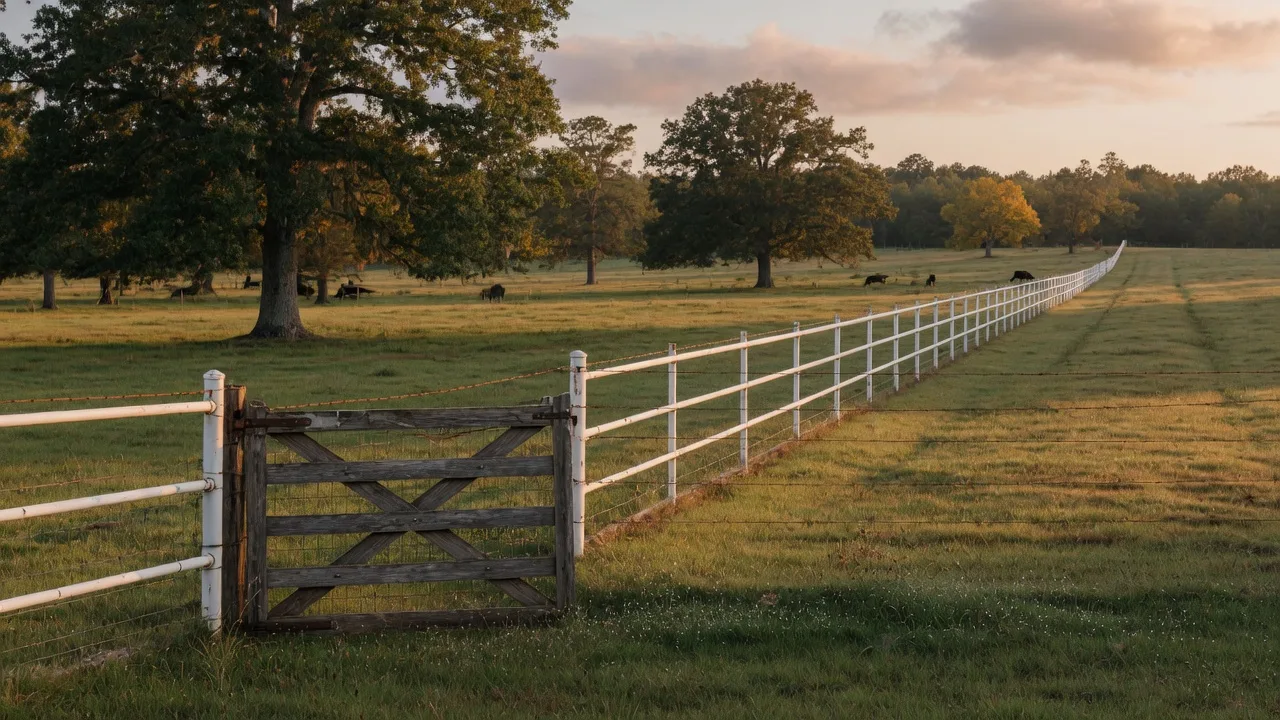
If you are dreaming of a place like 6260 Farm Road 197, a log cabin on 4.5 acres where you could keep chickens, plant a garden, and maybe raise a few goats, you have probably heard the phrase "Texas ag exemption" and wondered whether it applies to you. Here is the honest answer: that break is really a special appraisal on open-space agricultural land, and whether a tract qualifies depends on your county's standards, not just its size.
What the "Ag Exemption" Really Is
Formally, it is the Texas open-space agricultural valuation, often called 1-d-1. When land qualifies, the county appraisal district values it by its agricultural productivity instead of its market value, which can soften the bill considerably. For a Lamar County property, you apply through the Lamar County Appraisal District in Paris using Texas Comptroller Form 50-129. The land has to be devoted to a qualifying use like livestock, poultry, hay, or crops, to the degree of intensity typical for the area.
There Is No One-Size-Fits-All Acreage Figure
I hear two common assumptions: that a property must be huge, or that every rural lot gets the break automatically. Neither is true. Texas has no single statewide minimum acreage. Each county sets its own standards, and Lamar publishes its own classes that spell out expected grazing levels. A tract actively grazed or managed for hay has a real shot, while a small homesite with hens and hobby beds often will not reach the county's bar. The honest fix: call the appraisal district early and ask about current requirements before you plan any savings.
"Each county sets its own standards. The smartest thing a homesteader can do is ask the appraisal district early."
The Calendar Matters
The 1-d-1 application is an annual one. For the property tax, you file between January 1 and April 30 of the tax year. If you buy acreage outside that window, ask your appraiser where you stand, and keep the renewal on your calendar each year. Miss it and the land is taxed at its market value instead.
A Second Break Worth Knowing
There is a second benefit for anyone raising or growing for real, even on a small place: the Texas agricultural sales tax certificate. Once your operation qualifies, feed, seed, livestock, and fencing material can be bought without state sales tax. It is separate from the property tax appraisal, has no April deadline, and quietly helps any homestead in Northeast Texas.
Start With the Land
Fencing already in place, like the pipe and barbed-wire lines at 6260 Farm Road 197, and sandy loam soil that grows grass and gardens, give you options when you start that conversation. Treat this as a starting point, not tax advice. We are not your accountant, but we can point you to the Lamar County Appraisal District and the Texas Comptroller, and we enjoy helping buyers picture a small homestead.
Interested in a property like this? Contact the Shannon Miles Group at (903) 785-2005 or visit shannonmiles.com
Written by Shannon Miles
Shannon Miles is a REALTOR with the Shannon Miles Group at eXp Realty in Paris, TX. She specializes in acreage, new construction, and country properties across Northeast Texas.
Contact Shannon