Winter Prep for Chickens in Northeast Texas: A Coop Checklist Before the First Freeze

Shannon Miles
Shannon Miles Group, eXp Realty
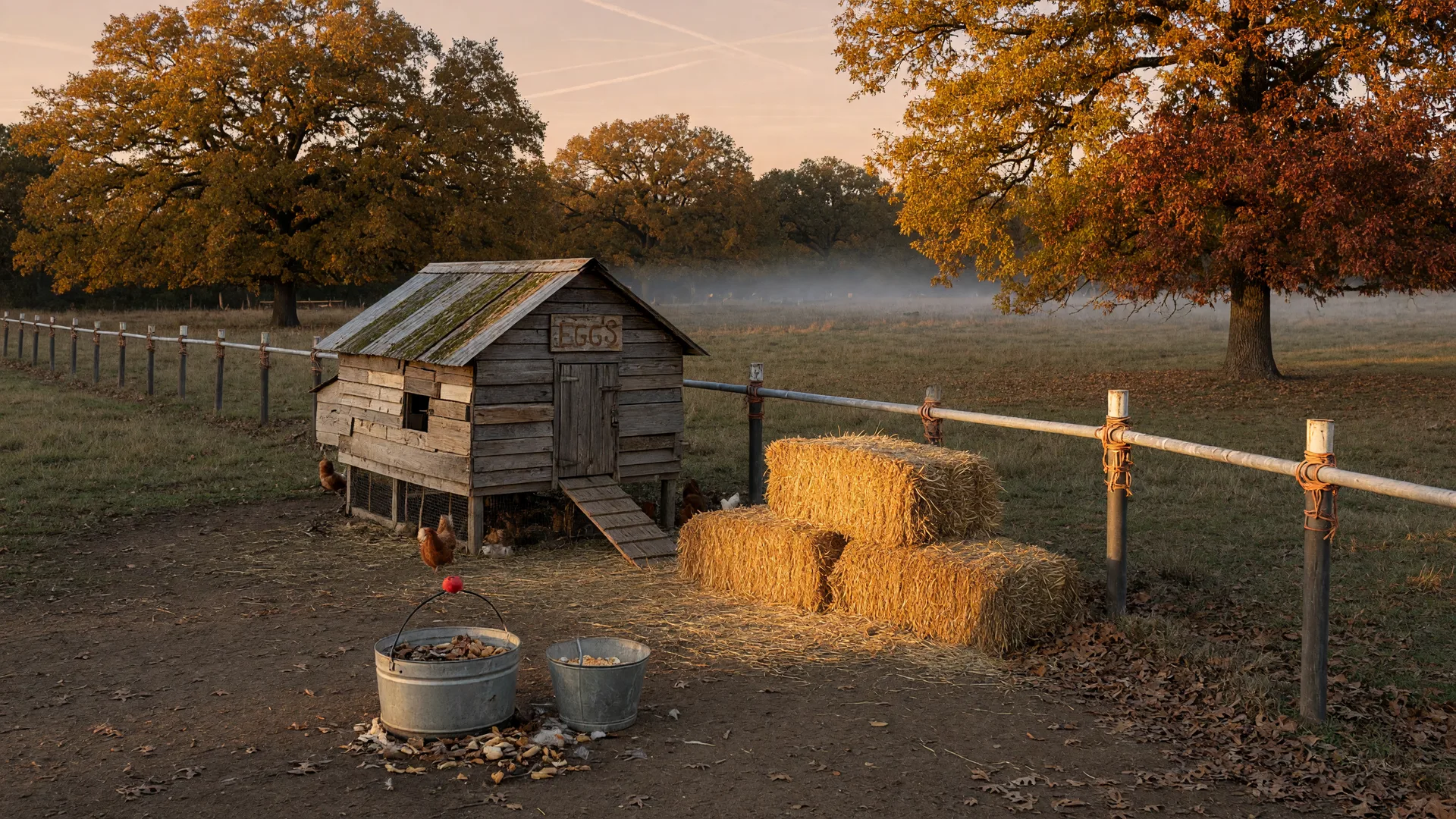
If you raise chickens on acreage in Northeast Texas, late October is the moment to think like the flock. The average first freeze near Paris lands around November 14, and the whole county plans around that date. Here is the coop checklist we share with folks moving to acreage like 6260 Farm Road 197, where a coop and run fit easily on the open pasture.
The number one rule of a winter coop is ventilation without drafts. A coop full of chickens puts out serious moisture overnight, and damp air is what causes frostbite on combs and wattles, as well as respiratory trouble in the flock. Cover the worst of the mesh with plexiglass or heavy plastic, but leave a gap up top so moist air can escape. A dry coop is a warm coop.
Deep, Dry Bedding Makes the Difference
Do a full clean before the cold settles in: strip the old bedding, scrub the nest boxes, and lay down four to six inches of straw or pine shavings. It insulates the floor and gives birds something to scratch. Roosting bars matter too. Give each hen about nine to twelve inches of bar space on flat wooden bars so feet sit flat instead of curling. A bird that roosts comfortably sleeps deeper and stays warmer.
Water, Feed, and the Heat Lamp Question
Chickens can go longer without food than water, so water is the daily chore that matters most. A heated waterer or heated base keeps the flock drinking through a hard freeze, and checking it twice a day is our habit when the wind is up. In cold weather, birds burn extra calories just staying warm, so bump them to a layer ration with 14 to 17 percent protein and toss out some scratch or cracked corn in the evening to help them generate body heat overnight.
Heat lamps are the one thing most Texas coops can skip. Chickens handle cold better than people expect, and heat lamps are the leading cause of winter coop fires. If you do add supplemental heat, keep the coop near 32 degrees at most and secure the lamp so bedding can never reach it. Warm feed and dry bedding carry most flocks through a Lamar County winter.
"A log cabin, a couple of acres, and a snug coop: that is country living, and winter is the season that proves it."
We show a lot of acreage near Arthur City, and the flock question comes up on almost every tour. The 4.5 acres at 6260 Farm Road 197 have open pasture out front, mature trees for shade, and pipe and barbed-wire fencing already in place, which is half the battle when you are setting up a coop and run. If you are just starting out, our guide to homesteading in Northeast Texas covers the first steps, and this October is the right time to take them.
Interested in a property like this? Contact the Shannon Miles Group at (903) 785-2005 or visit shannonmiles.com
Written by Shannon Miles
Shannon Miles is a REALTOR with the Shannon Miles Group at eXp Realty in Paris, TX. She specializes in acreage, new construction, and log cabins across Northeast Texas.
Contact Shannon